Victoria (20 June 1837 - 22 January 1901)

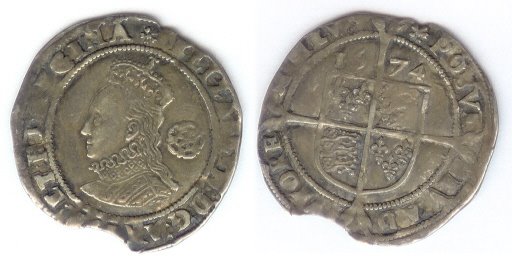
Here is an example of a Jubilee Shilling from 1887 of Queen Victoria Spink Number 3926 Small Head some additional information can be found below.
HOUSE OF HANOVER
Victoria (20 June 1837 - 22 January 1901) - born 24th May 1819 - one marriage with nine offspring
Victoria (20 June 1837 - 22 January 1901) - born 24th May 1819 - one marriage with nine offspring
Victoria was granddaughter of George III, the daughter of his fifth son Edward. Her father Edward died while she was in infancy, but her mother Victoria of Saxe-Coburg-Saalfeld brought her up under a strict regimen that stood her in good stead to be Queen upon the death of her Uncle William. A Royal wedding took place on 10 February 1840 to Prince Albert of Saxe-Coburg-Gotha, with whom she had four sons and five daughters, all of whom married into some of the finest Royal families in Europe. Victoria was devastated by the death of her beloved Albert in 1861 from typhoid and never really recovered, known as the “Widow of Windsor” in seclusion for 25 years until she emerged for her Golden Jubilee. During the seclusion Victoria also became Empress of India in 1878.
Victoria enjoyed the longest reign so far of any monarch and saw her Diamond Jubilee in 1897, the only time this has occurred in British history so far. The Industrial Revolution was now in full force, the zenith of which was the Great Exhibition of 1851. Victoria built up the greatest Empire ever seen since the days of the Ancient Romans. There were many technological revolutions with the harnessing of electricity perhaps most significant, also the invention of the telephone and motor transport, as well as the massive growth of railways and shipping and science. Magnificent architecture from the Victorian era not only transformed London, but also cities as far apart as Sydney and Delhi, Hong Kong and Singapore.
Victoria died aged 81 with her family gathered around her at Osbourne House on the Isle of Wight after a 63 year reign, her body was brought back to the Capital by the Royal Train. Her long reign produced some fascinating coinage and many different busts were used for the various Colonial coinages. Branch Mints opened in Australia, first in Sydney then Melbourne, and much later at Perth. There were attempts at decimalization during her reign and the biggest successful move towards this was the introduction of the Florin or one tenth of a pound in 1848.
Some of the finest designs were by William Wyon for the 1839 gold Five Pounds coin used in that year’s proof set and later for the 1847 Gothic Crown. The Wyon family dominated coin and medal production for the earlier part of Victoria’s reign, J E Boehm engraved the Jubilee coinage of 1887, and Thomas Brock the “widow” old head coinage of 1893.